
The Ultimate Guide to the Restraining Order Process in California
What Is a Restraining Order and When Is It Needed?
The court issues a restraining order to protect individuals from abuse, threats, stalking, or harassment. In California family law, the most relevant form of protection is the Domestic Violence Restraining Order (DVRO), which the law governs under Family Code §§ 6200–6409.
You can request a DVRO against someone you have a close relationship with, such as a spouse, former partner, dating partner, co-parent, or certain relatives listed in Family Code §6211.
This order may:
- Prevent the abuser from contacting you by phone, text, or social media
- Require them to move out of the shared residence
- Grant you temporary custody of children
- Prohibit firearm possession under Family Code §6389
If you’re in immediate danger, a family law attorney in Orange County can help you file for emergency protection—sometimes the same day.
👉 Learn how emergency hearings and ex parte orders work
Key Legal Protections Under a DVRO
A DVRO offers powerful tools to keep victims safe. Under Family Code §6320, the court can issue emergency protective orders without informing the other party. These can:
- Bar all contact (direct or indirect)
- Remove the restrained party from the home
- Grant exclusive temporary custody
- Require firearm surrender
A permanent DVRO (issued later at a hearing) may last up to 5 years under Family Code §6345.
Recognizing the Signs You May Need a Restraining Order
California law defines abuse under Family Code §6203 to include:
- Physical assault or threats
- Stalking or surveillance
- Verbal abuse or emotional intimidation
- Property destruction or threats to children
- Refusal to leave shared living or work spaces
These behaviors can be warning signs that a DVRO is needed. Courts take these allegations seriously and move quickly to provide protection.

The Restraining Order Process in California: Step-by-Step
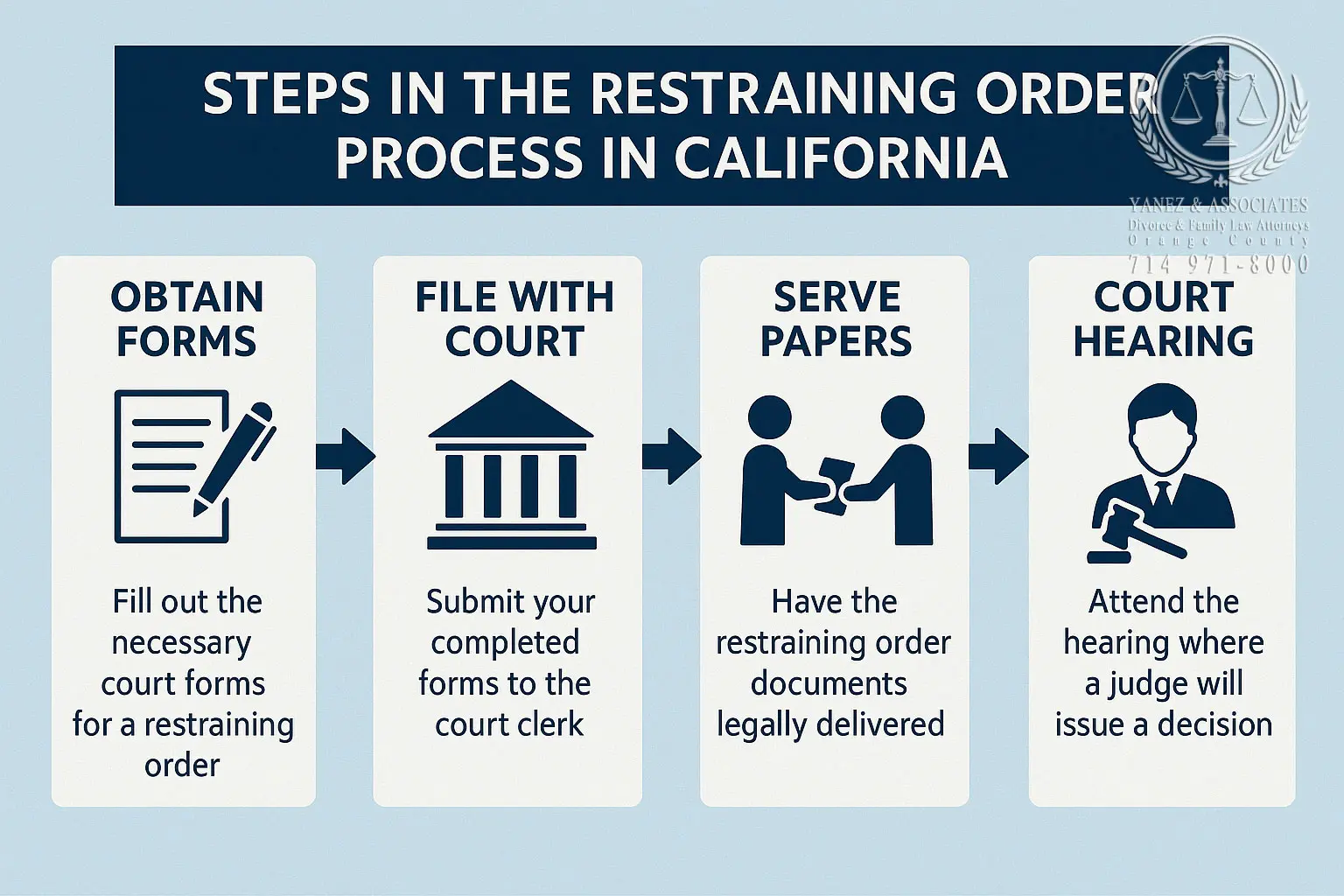
Step 1 – File for a Temporary Restraining Order (TRO)
Complete and submit forms including:
- DV-100 (Request for Domestic Violence Restraining Order)
- DV-110 (Temporary Restraining Order)
These documents ask the court for immediate protection. You do not need to notify the other party at this stage (ex parte).
Step 2 – Serve the Respondent
You must have the restrained person formally served with the paperwork. The court cannot proceed until proper service is completed. A third party—not you—must handle this.
Step 3 – Attend the Court Hearing
Both sides will present evidence before a judge. If the court finds the protected party is at risk, it can issue a permanent DVRO that may last up to 5 years.
What Happens at the Hearing?
At the DVRO hearing, bring:
- Photos of injuries or damage
- Screenshots of texts, emails, or voicemails
- Police reports or medical records
- Witness declarations, if available
The judge will review both sides’ testimony and evidence before deciding on a permanent order, issued using Form DV-130. Representation by a family law attorney can significantly impact your outcome.
👉 Tips for child custody and DV-related court hearings
What If You Were Served With a Restraining Order?
If you receive a DVRO, do not ignore it. You have rights and a limited window—usually 5 to 10 days—to respond using DV-120 (Response to Request for DVRO).
You have the right to:
- Challenge false allegations
- Present your side of the story
- Request modification of custody terms
Consequences of a permanent order can include:
- Loss of firearm rights (Family Code §6389)
- Negative impact on background checks
- Changes to custody or visitation rights

How Does a Restraining Order Affect Child Custody?
Under Family Code §3044, the court presumes that awarding custody to someone who committed domestic violence in the past five years is not in the child’s best interest. This can result in:
- Sole legal and physical custody awarded to the other parent
- Supervised visitation
- Limited parental rights in the long term
This presumption can be overcome, but it requires substantial evidence and legal advocacy.
Violating a Restraining Order Can Lead to Criminal Charges
Under Penal Code §273.6, any violation of a restraining order is a crime. Penalties may include:
- Jail time
- Fines
- Probation
- Loss of employment or custody
Even unintended contact (like liking a Facebook post) can be considered a violation. If you’ve been accused, contact an attorney immediately.
Frequently Asked Questions: Answers to Your Most Pressing Restraining Order Questions
Legal Help for Restraining Orders in Orange County
If you’re seeking protection or defending your rights, don’t face this alone. At Yanez & Associates, we understand the emotional and legal complexities of domestic violence cases.
Our family law attorneys in Orange County can help you:
- File for emergency or permanent restraining orders
- Prepare for DVRO hearings
- Modify custody or visitation orders
- Respond to or challenge false claims
👉 More on Domestic Violence Legal Protections
📞 Call us today at 714-971-8000 to schedule your consultation and take the first step toward protecting your relationship with your child.
- Phone: (714) 971-8000
- Email: info@yanezlaw.com
- Address: 770 The City Dr S, #1300, Orange, CA 92868


